• Skip navigation
  • Skip to navigation
  • Skip to the bottom
Simulate organization breadcrumb open Simulate organization breadcrumb close
DFG Research Training Group 2740 Immunomicrotope –
  • FAUTo the central FAU website
Suche öffnen
  • Campo
  • StudOn
  • FAUdir
  • Jobs
  • Map
  • Help

DFG Research Training Group 2740 Immunomicrotope –

Navigation Navigation close
  • 2nd International Conference “ImmunoMicroTope”
  • Research
    • Project areas
      • Project area A “Micromilieu”
      • Project area B „Metabolism“
    • List of publications by doctoral researchers of the RTG 2740 (2022-2025)
    • Publications by principal investigators
    • Latest Publications
    • Awards
    Portal Research
  • Program
    • Curriculum
      • RTG 2740-specific training measures
        • Lectures, seminars and research meetings
        • Workshops and practical courses
        • Annual and other scientific events
      • Training in general professional and transferable skills
      • Measures to promote national and international networking
    • Organization
    Portal Program
  • About us
    • Doctoral Researchers of the 1st cohort
    • Doctoral Researchers of the 2nd cohort
    • Associated Doctoral Researchers
    • Medical Doctoral students
    • Principal Investigators
    • Associated Principal Investigators
    • Coordinator
    • Executive Board
    • External Advisory Board
    Portal About us
  • Open positions
  • How to apply
  1. Home
  2. Research
  3. Project areas
  4. Project area A “Micromilieu”
  5. A8: Hypoxia shapes Salmonella virulence

A8: Hypoxia shapes Salmonella virulence

In page navigation: Research
  • List of publications by doctoral researchers of the RTG 2740 (2022-2025)
  • Project areas
    • Project area A “Micromilieu”
      • A1: Control of Citrobacter rodentium by oxygen-dependent B cell regulation
      • A3: Induction and regulation of Coxiella burnetii persistence by microenvironmental factors
      • A4: The regulatory role of fibroblastic reticular cells during intestinal bacterial infections
      • A5: Impact of microenvironmental factors on neutrophil effector functions directed against Salmonella (S.) enterica serovar Typhimurium
      • A6: Eosinophils shape the tissue micro milieu and immune response in cutaneous leishmaniasis
      • A7: Characterization and mathematical modeling of the STAT6-regulated micromilieu in response to Nippostrongylus brasiliensis infections
      • A8: Hypoxia shapes Salmonella virulence
    • Project area B "Metabolism"
  • Publications by principal investigators

A8: Hypoxia shapes Salmonella virulence

A8: Hypoxia shapes Salmonella virulence

Low oxygen (O2) tension is a signature environmental cue of host tissues sensed by bacterial pathogens like Salmonella enterica serovar Typhimurium (S. Typhimurium). Hypoxia is integrated together with other signals present in the intestinal tract such as microbiota-derived short-chain fatty acids (SCFAs) and acidic pH, to regulate virulence functions in a precise spatio-temporal manner. Salmonella is particularly exposed to drastic environmental changes when approaching host cells. There is a zone of relative oxygenation due to oxygen diffusion from arterial blood and acidic pH gets neutralized by mucins overlaying the surface of enterocytes. Under conditions mimicking these changes, we found increased activity of the Salmonella Pathogenicity Island 1 encoded Type 3 Secretion System (T3SS-1) leading to elevated bacterial invasion. Here, hypoxia-dependent incapacitation of the repressor HilE enhanced the activity of the T3SS-1 master regulator HilD.
In the next funding period, we want to characterize these adaptation processes on the levels of transcription, post-translational modification and population heterogeneity using sophisticated infection models. A detailed knowledge of these mechanisms would significantly expand our knowledge how Salmonella recognizes host cells and might lead to the identification of novel targets for anti-infective therapies.


Supervisors

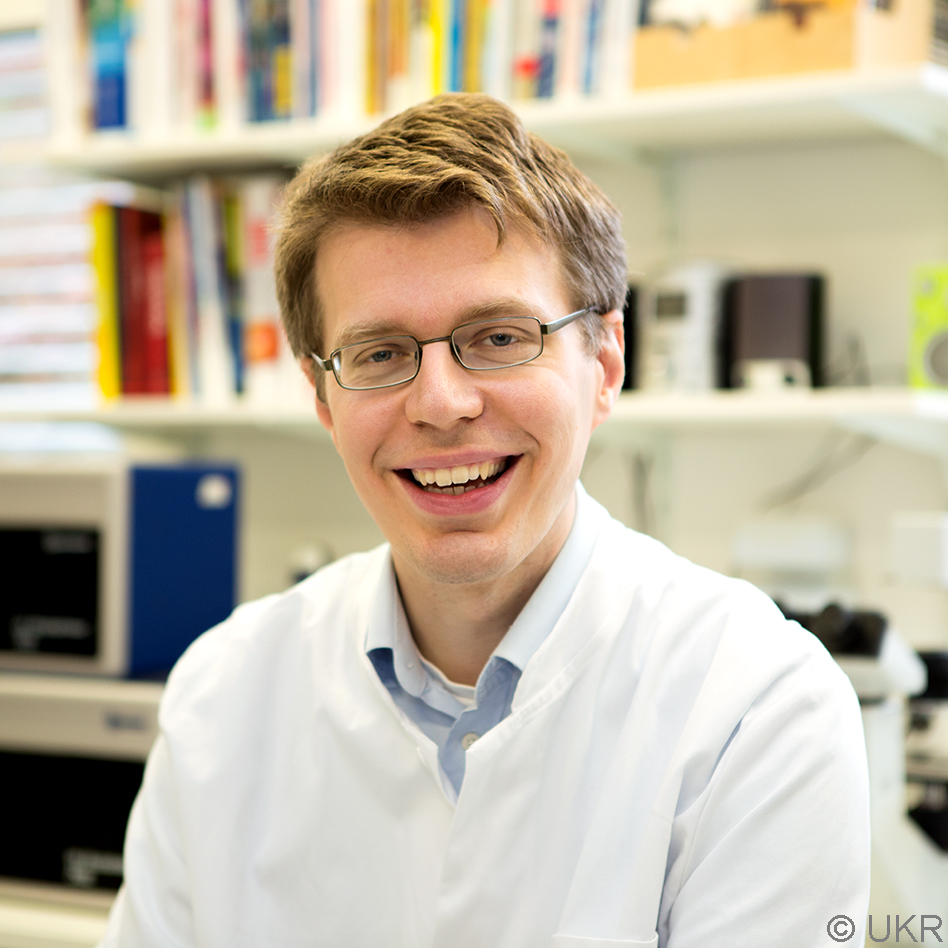
Dr. rer. nat. Roman Gerlach

Dr. rer. nat. Roman Gerlach

Wasserturmstraße 3/5
91054 Erlangen
  • Phone number: +49 9131 85-35991
  • Email: roman.gerlach@uk-erlangen.de
More › Details for Roman Gerlach
Jonathan Jantsch

Prof. Dr. Jonathan Jantsch

Goldenfelsstr. 19-21
50937 Köln
  • Email: jonathan.jantsch@uk-koeln.de
More › Details for Jonathan Jantsch
Universitätsklinikum Erlangen
Mikrobiologisches Institut

Wasserturmstr. 3/5
91054 Erlangen
  • Imprint
  • Privacy
  • Accessibility
  • Facebook
Up